Co-Op Alteration Agreements: They’re Not All That Bad!
“Will I be able to renovate?” is a top question I get from potential buyers, usually fueled by that uncle who doesn’t even live in New York or someone in a Reddit thread claiming upgrades in co-ops are off-limits. The reality? You absolutely can. In fact, in a city full of pre-war and mid-century buildings, renovations are what keep these homes vibrant and marketable. A quick search for “fully renovated” co-ops will show you countless recently upgraded options. While every building has its own nuanced requirements, curating your dream apartment is not at all out of reach.

“Will I be able to renovate?” is a top question I get from potential buyers, usually fueled by that uncle who doesn’t even live in New York or someone in a Reddit thread claiming upgrades in co-ops are off-limits. The reality? You absolutely can. In fact, in a city full of pre-war and mid-century buildings, renovations are what keep these homes vibrant and marketable. A quick search for “fully renovated” co-ops will show you countless recently upgraded options. While every building has its own nuanced requirements, curating your dream apartment is not at all out of reach.
Here are the common myths and realities around alterations in co-ops:
Myth: The board just wants to have total control over my life!
Reality: The board has (and you as a shareholder have) a vested interest in the safety and upkeep of the building. Without any accountability, you or your neighbors may make alterations that compromise the structural integrity of the unit and surrounding units. Imagine if your neighbor pulled out a key support wall causing the ceiling/floors to sag and at best, your doors no longer close properly, and at worst, a total collapse. Rules exist for a reason, in this case it’s for physical and financial liability.
Myth: Altering a co-op unit is a tedious process that involves paperwork and permits and there will be too many roadblocks.
Reality: Any work you do to a home, whether it be a co-op, condo, or single-family, may require pulling and closing permits. Permits exist for safety reasons so why wouldn’t you want to ensure the work is done correctly in any home? From a real estate perspective, doing things improperly can create issues down the line when you go to sell the home – title searches will show open permits that need to be resolved before closing, not to mention inspectors can often tell when work has been done incorrectly or without permits and scare off buyers. As for co-op alteration paperwork, in my experience the process is straightforward: you provide the signed agreement, contractor’s plans and insurance, and a refundable deposit (usually $500), the board approves it, and you’re on your way. Your realtor or attorney should ask for the alteration agreement as part of due diligence so you can be sure of what the process will be for your building before signing the contract.
Myth: I won’t ever be able to have what I want if I live in a co-op.
Reality: I always advise my clients to focus on things they can’t change when searching for a co-op unit, one of those being layout. Layout is hard to change due to wet-over-dry rules (you can’t move the kitchen or bath to another part of the unit that sits over a “dry” room of the unit below you, like the bedroom). Not to mention gas lines and plumbing are often static in buildings (condos included). But if you have to do THAT much work it’s probably not the right layout for you. People gut renovate co-ops all the time so as long as you’re keeping the room layout consistent you can customize floors, cabinets, tile, appliances to your heart’s content. That being said, I have seen closed co-op spaces turned into open concepts by removing non-support walls, and walls with pocket doors added to a dining space to turn it into a second bed or home office, both of which are technically layout changes. Properly planning and following process will get you what you want most of the time!
On a personal note…
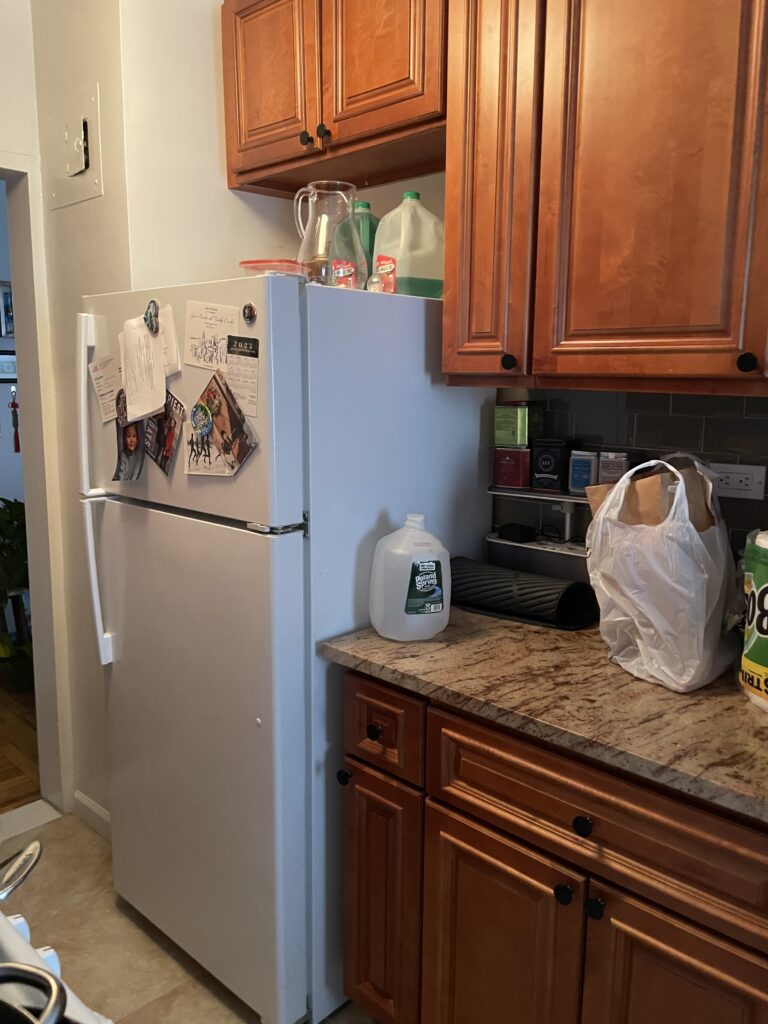
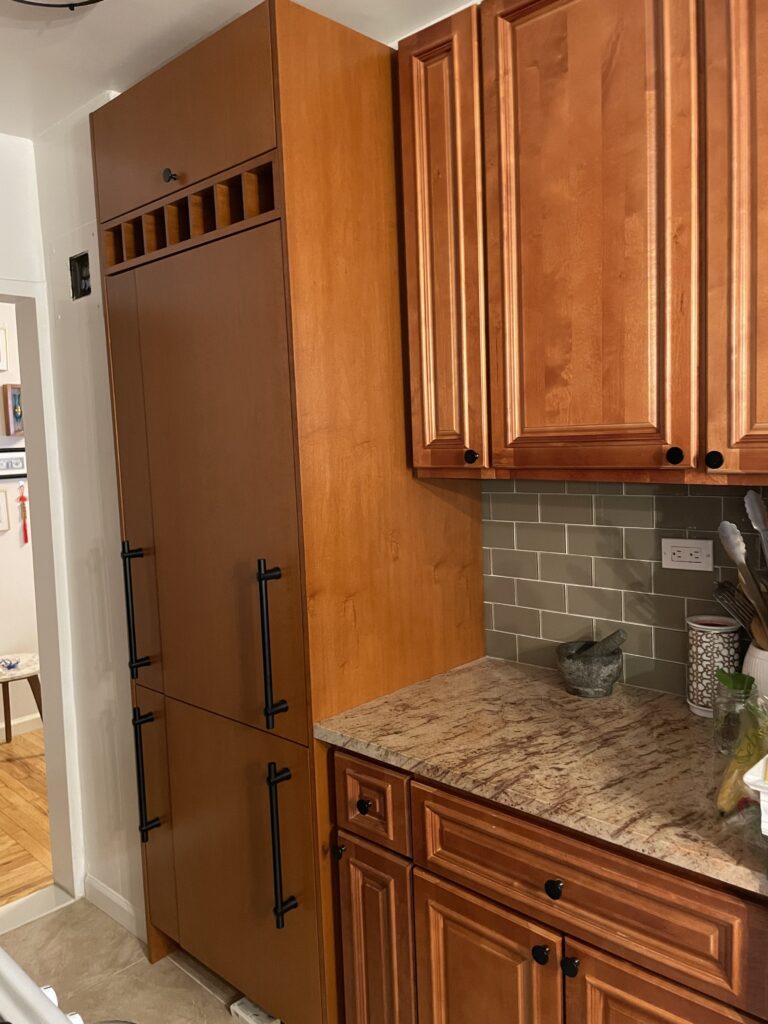
My own experiences with co-op alterations have been positive. Two years ago I had a custom fridge built into my kitchen to replace the unsightly (and huge) white fridge that was there previously. I hired Mikheil Karanadze of Geowood Designs and he knocked it out of the park, designing a beautiful built-in, counter depth fridge complete with a wine rack, pull-out spice rack, and extra storage. An incredibly efficient use of space in a small NYC kitchen!
Check out the before and after: